








































 12
12 


 TAGASI
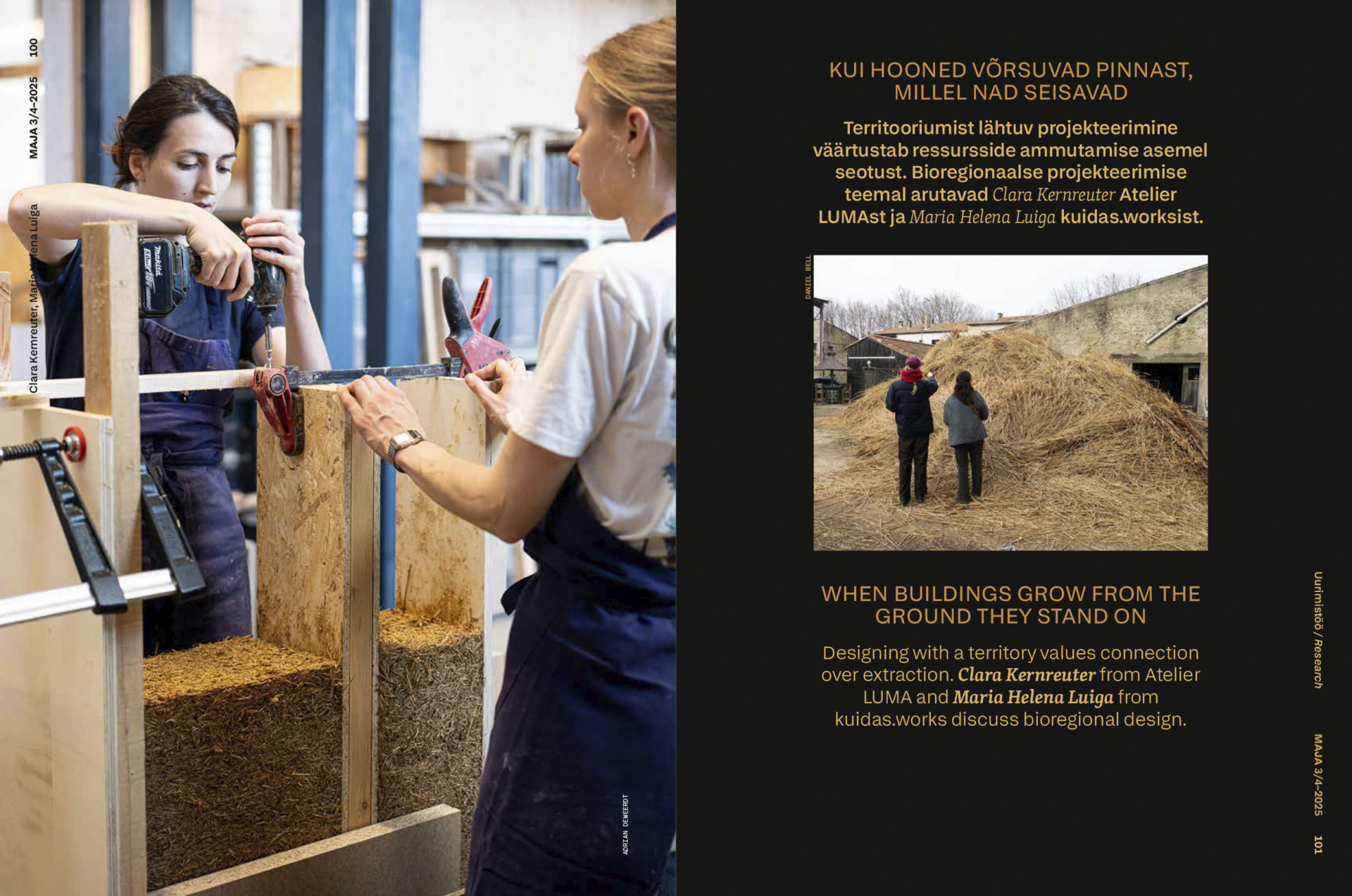
Designing with a territory values connection over extraction. Clara Kernreuter from Atelier LUMA and Maria Helena Luiga from kuidas.works discuss bioregional design.
Reclaiming the bond between design and territory
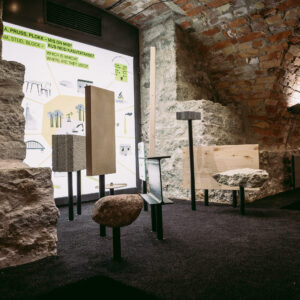
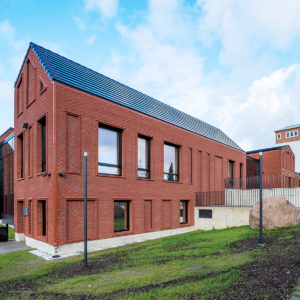
‘Here in Arles, we have rice fields, pastures, Aleppo pines, limestone, and red sandstone. So why are our neighbourhoods built with cinder blocks, PVC, plasterboard, and rock wool? The question seems naive, but it speaks volumes. It reveals a gap between territories and those who develop them. It points to the amnesia caused by the global standardisation of materials, techniques, and the skills they entail. It tells a truth: we no longer know how to ‘inhabit’ our territories. In our Western societies, the act of building has been homogenised, erasing the distinct textures and identities that once tied architecture to its territory. If we want to bring production and territory into harmony again, design, like architecture, cannot simply evolve along the trajectories of technological progress or global trends. We must recontextualise design and face up to what this implies: breaking with the extractivist model, inherited from mass industrialisation and productivist colonialism, which is still active under the guise of neoliberal globalisation. It is in this context, where the habitability of territories is being questioned more than ever, that the term ‘bioregional design’ takes on new importance.
/…/


