








































 229
229 

 TAGASI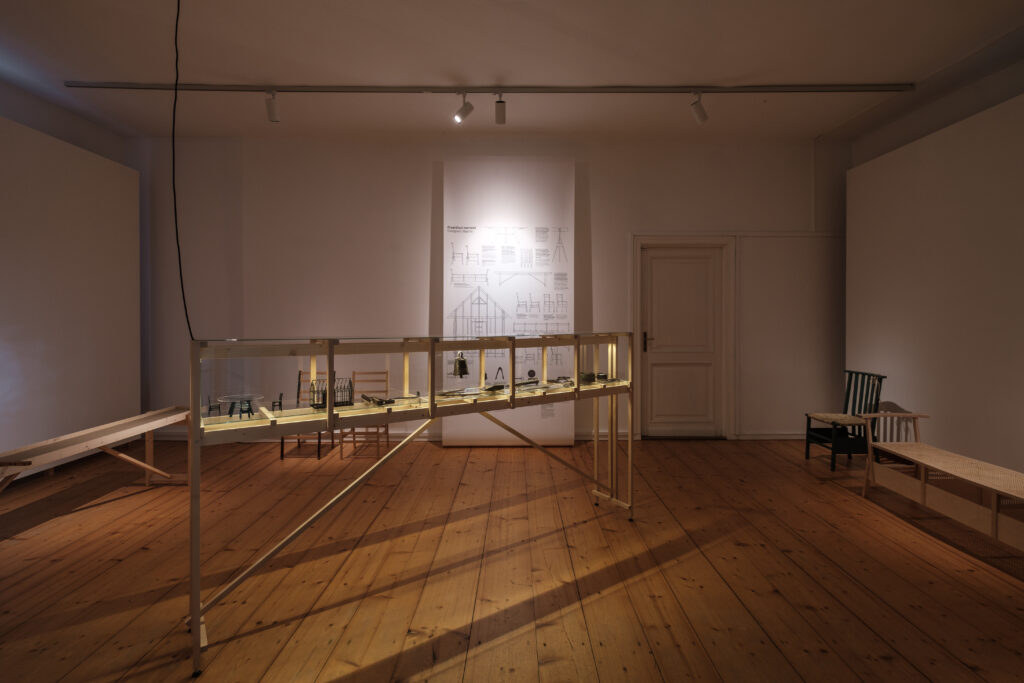
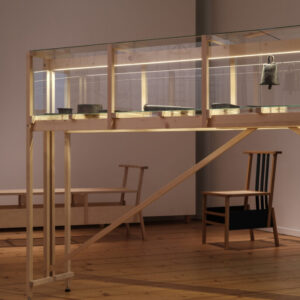
At the heart of “Joint Double” is a scholarly investigation by the designer, design historian and interior architecture professor Jüri Kermik into the layered nature of the design process – how an artist’s creation has the ability to unfold simultaneously into the future as well as into the past. The exhibition sprang from his abiding interest in regional, tradition-based style, asking how form, material, detail and structure convey the identity of a place and at what point an object becomes both personal and geographically definable.
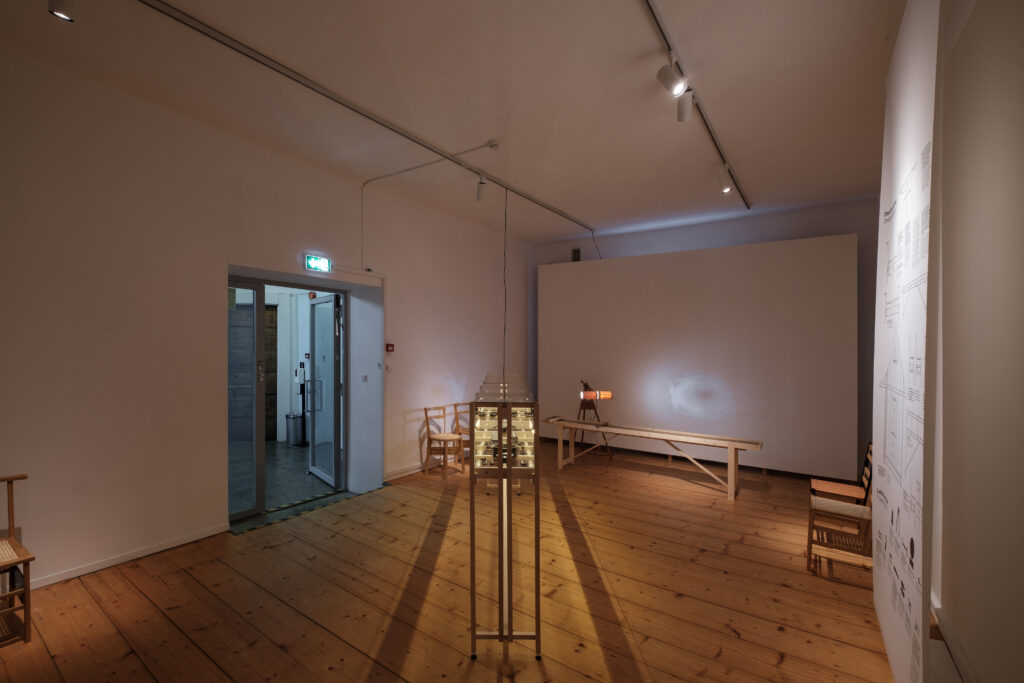
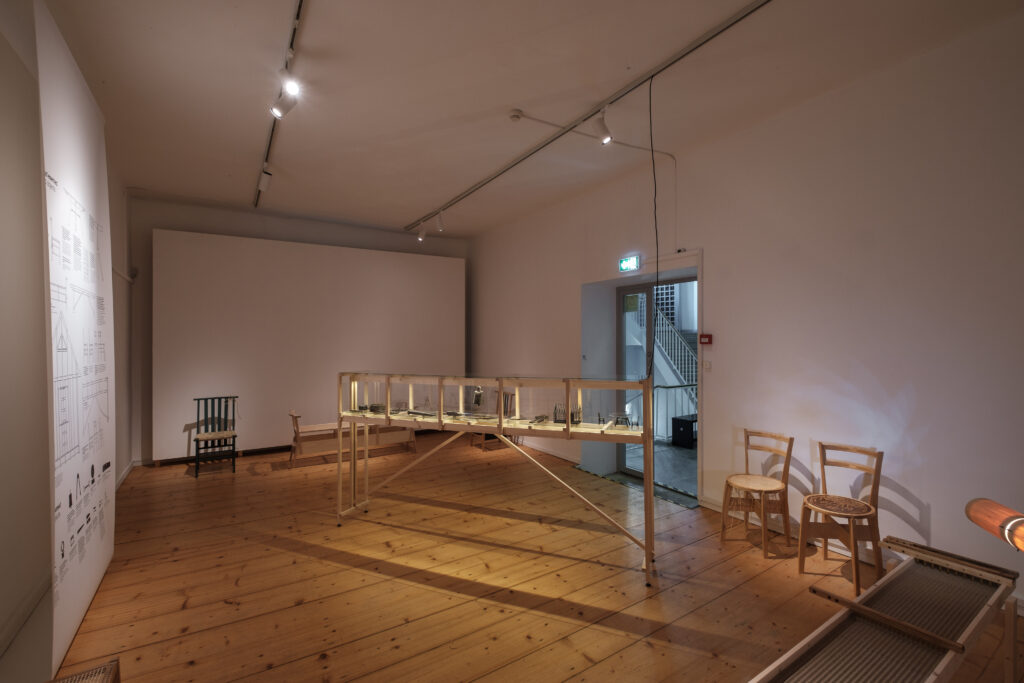
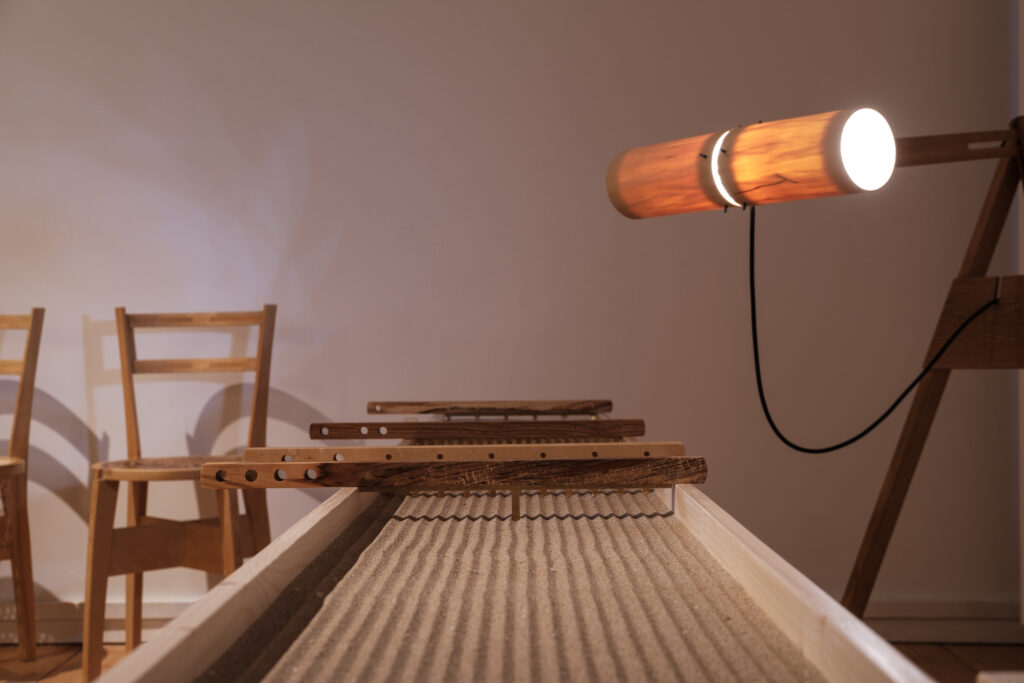
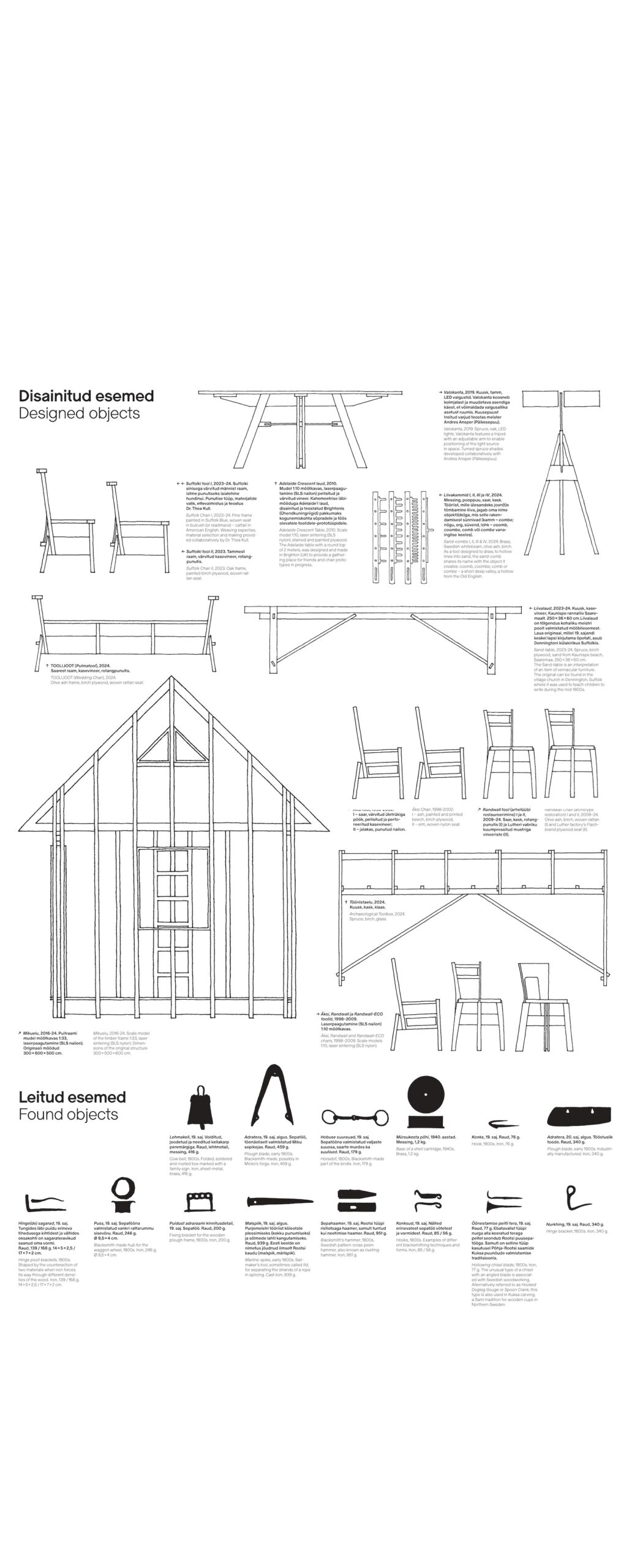
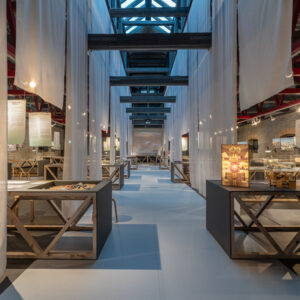
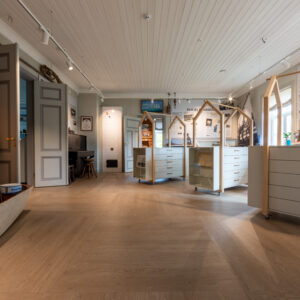
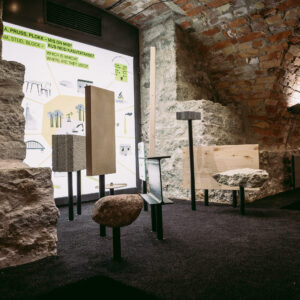
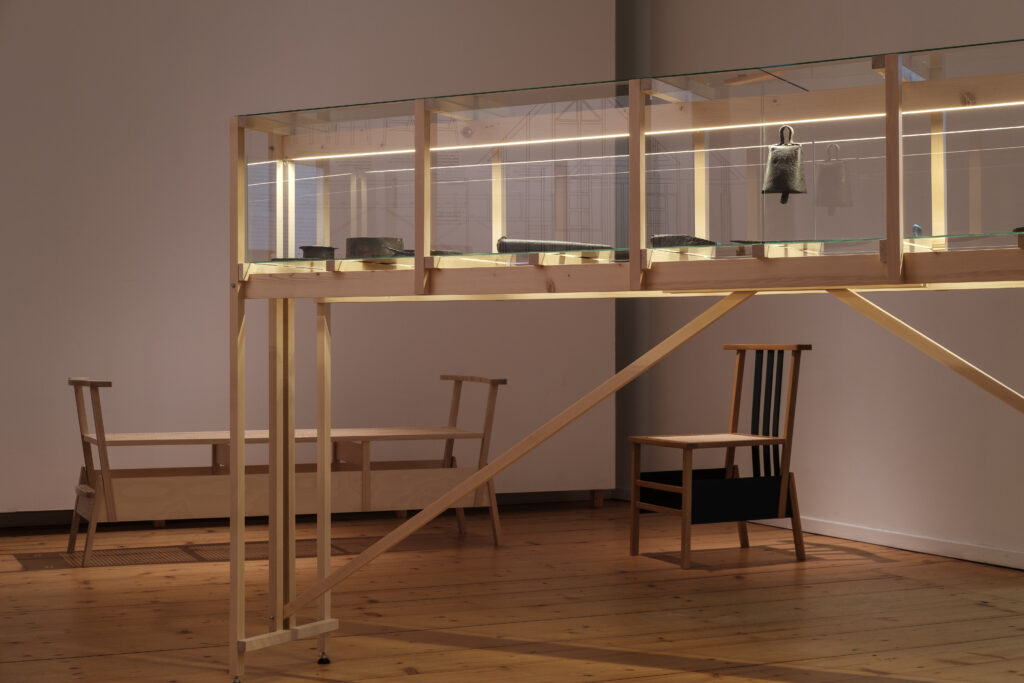
The items on display were chairs and tables designed by Kermik himself, along with structural sketches, complemented by a selection of found objects – hammers, hinges, blades and other fragments. These objects were from places that Kermik is connected to: the islands of western Estonia and Suffolk, England, where he has lived and worked since 2017. It was there that he started noticing similarities in the structure of folk chairs in Estonia and Suffolk. Lightweight and often produced in seasonal workshops, the chairs were from different regions but used similar principles for their frame structure. At the same time, one distinctive detail stood out in the Suffolk chairs: how the seat part was joined to the frame. In the Estonian tradition, the seat frame was often formed from cross-pieces connecting the chair legs, while the frame of the Suffolk chairs was tenoned into the tops of the front legs. This structural difference opened up an array of new possibilities for Kermik: how this joint affects proportions, comfort, strength or overall spatial stance.