









Estonian Architecture Awards 2025
PRESS RELEASE
February 14, 2026
The 2025 Architecture Awards were presented on Saturday, 14 February, 2026 at a festive ceremony held at Tallinn City Theatre, honouring the most outstanding architectural projects and professionals of the year.
This year, the Architecture Endowment of the Cultural Endowment of Estonia, the Estonian Association of Architects, the Estonian Association of Interior Architects, the Estonian Association of Landscape Architects, and the architecture magazine MAJA honoured a total of 17 laureates – the authors of the most outstanding achievements and works in the field of Estonian architecture.
A total of 166 entries were submitted to the competitions.
Five awards of the Architecture Endowment of the Cultural Endowment of Estonia:
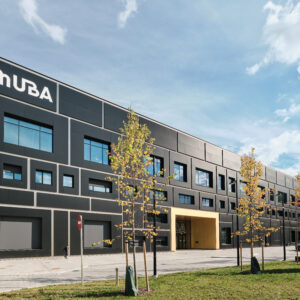
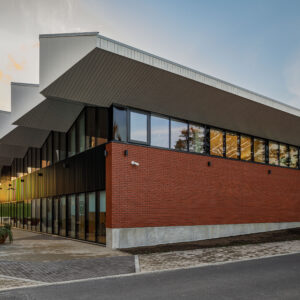
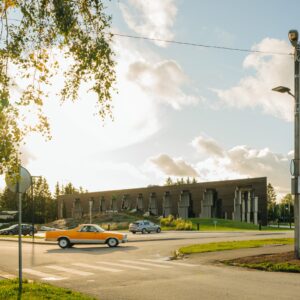
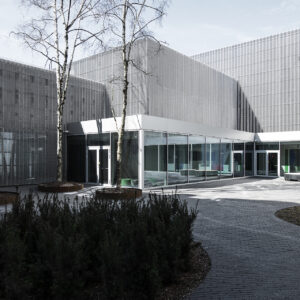
The Grand Prize was awarded to Salto architects – architects who never compromise on quality.
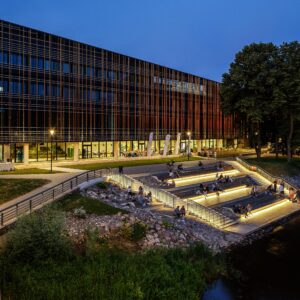
Both projects submitted by Salto architects – the Tallinn City Theatre and the Saku Gymnasium and Sports Complex – clearly demonstrate the authors’ ability to create spaces that are both thoughtful and engaging, combining clarity with richness and variation. As a creative collective, Salto is characterised by strong dedication and a determination to achieve the best possible spatial solution. They carefully consider the location and cultural context, always adding something individual and unexpected. In the work of Salto architects, one can recognise values that successfully unite everyday functionality and logistical clarity into a beautiful, organic whole.
Saku Gymnasium architecture: Ralf Lõoke, Maarja Kask, Kerstin Kivila, Ragnar Põllukivi, Margus Tamm, Helina Laborde, Martin McLean
Photos: Vallo Kruuser, Tõnu Tunnel, Terje Ugandi, Kaupo Kalda, Andro Mänd
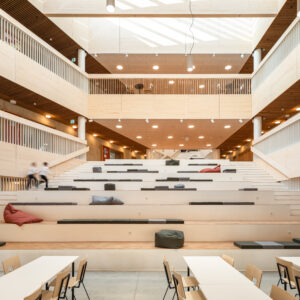
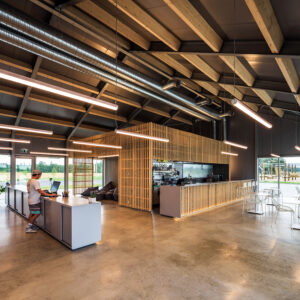
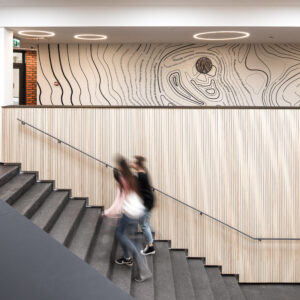
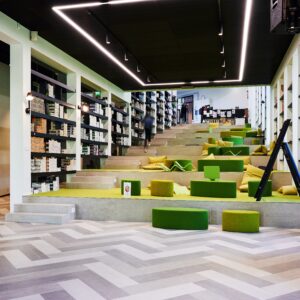
The Interior Architecture Award went to Saku Gymnasium and Sports Complex.
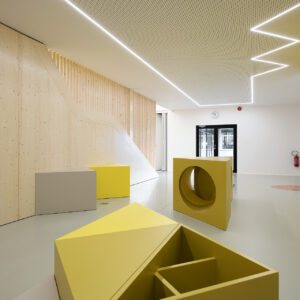
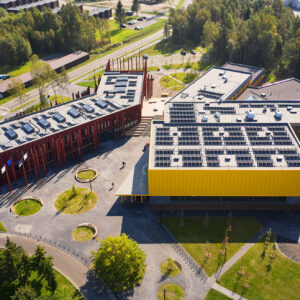
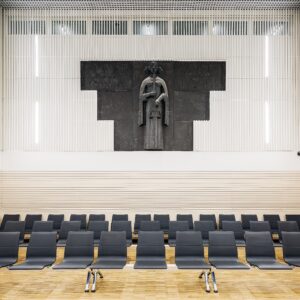
The small town of Saku has gained a spacious, aesthetically inspiring and enduring school building. In terms of spatial design, it is a strikingly beautiful new school where architecture and interior architecture support one another at every level. Externally relatively restrained, the building surprises with its clear internal layout and refined interior. Classrooms, group work areas and circulation spaces are clearly and efficiently connected.
Interior architecture: Gerly Vaikre, Mariel Tõld, Pille Lausmäe-Lõoke (Pille Lausmäe SAB); architecture: Ralf Lõoke, Maarja Kask, Kerstin Kivila, Ragnar Põllukivi, Margus Tamm, Helina Laborde, Martin McLean (Salto architects); landscape architecture: Maarja Gustavson (Polka)
Photos: Tõnu Tunnel
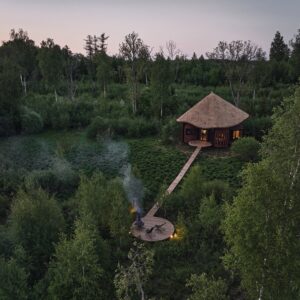
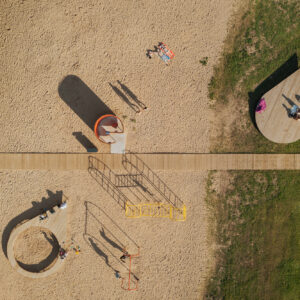
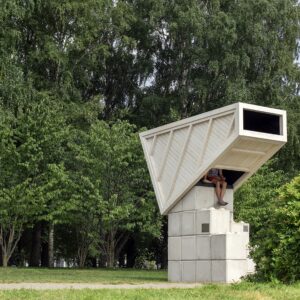
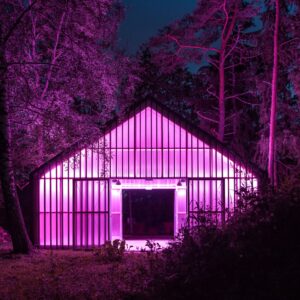
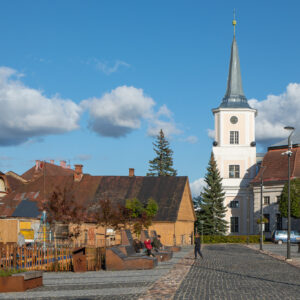
The Award for the Activity in the Field of Architecture went to the team of Architecture Residency VARES: Mari Möldre, Margus Tammik, Ulla Alla, Merilin Kaup.
The architecture residency in Valga brings together architects, urban planners, designers, builders, artists and other spatial practitioners and theorists, offering them a space to pursue creative, research-based or community-oriented work free from market pressures. Their interests include slow architectural practice, critical reflection of the field, material circulation, experiments in everyday life as well as testing and developing forgotten or undiscovered methods. In its activities, VARES aims to enliven the public space in Valga and introduce playfulness, spatial experiments and new discussions, making use of the particular features of the inspiring town. In the past two years VARES has hosted over 50 residents from Estonia and abroad. In addition to the residents’ activities, VARES has also organised short-term summer and winter schools, vision competitions and various public events enticing interested audiences away from the capital city.
Photos: Solveig Lill, Yuta Sawamura, VARES
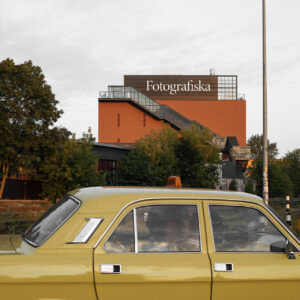
The Design Award went to Research Project, Exhibition and Book “Bruno Tomberg. Inventing Design”.
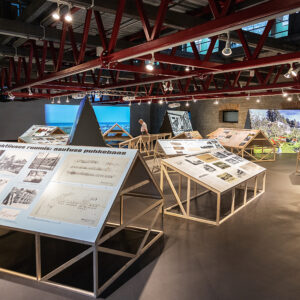
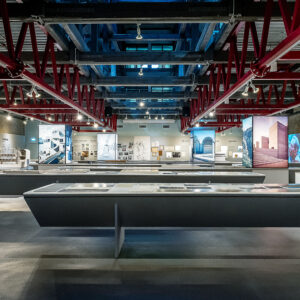
From the perspective of Estonian design history, this was an exceptionally significant research project, presented to a wider audience in the form of an exhibition and a book. The project “Bruno Tomberg. Inventing Design” provides an overview of Tomberg’s nearly six decades of work and tells the story of the development of Estonian applied art and design. Both the exhibition and the book approach the various facets of Tomberg’s work with a sufficient level of synthesis to create a coherent overall picture. The authors’ approach reflects Tomberg’s professional systematicity and analytical mindset – design as a form of thinking.
Research author and exhibition curator: Kai Lobjakas; exhibition design: Ulla Alla, Merilin Kaup; graphic design: Indrek Sirkel
Photos: Andres Teiss, Paul Kuimet
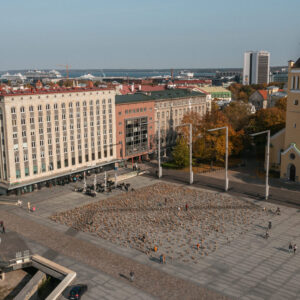
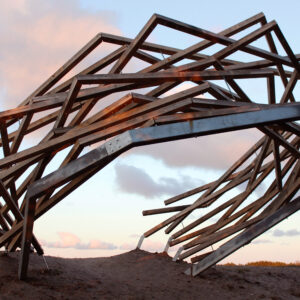
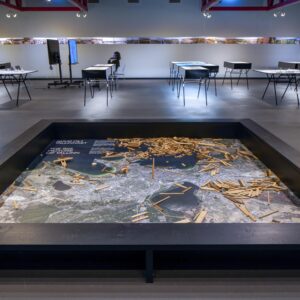
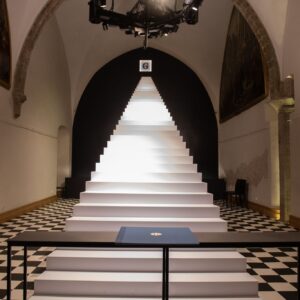
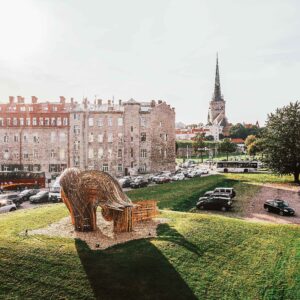
The Installation Award went to The Estonian Exposition at the Venice Biennial 2025 “Let Me Warm You”.
Although site-specific, the installation resonated with a broad international audience through its timely and topical framing. At once startling, striking and humorous, the work clearly conveyed the authors’ message: that in attempting to solve the climate crisis through campaign-style measures, architecture is often overlooked and human relationships suffer as a result. Noble ideas inspired by the green transition can become absurd if, in the process of their implementation, historically valuable buildings and urban ensembles are destroyed.
Authors: Keiti Lige, Helena Männa and Elina Liiva
Photos: Joosep Kivimäe
Three awards of the Estonian Association of Architects:
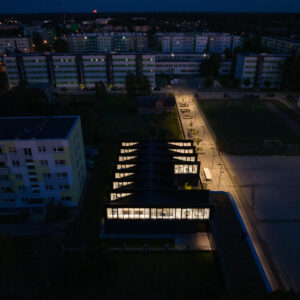
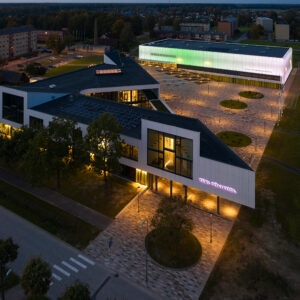
The Annual Architect Award went to Saku Gymnasium and Sports Complex.
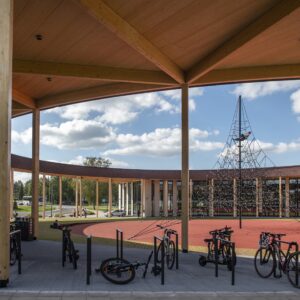
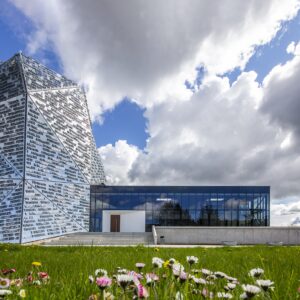
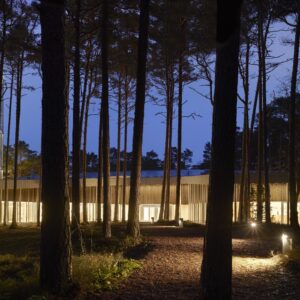
According to Sam Jacob, British architect and critic, jury of the Annual Architect Award, it was hard to believe what unfolded before his eyes upon arrival: beside the school building, a grand circular courtyard spread out in a generous gesture, crowned by a dramatically rising triangular wooden canopy. It became clear that this magnanimous gesture – part agora, part playground, yet entirely collective in nature – forms part of a larger complex, whose smaller section dedicated to sports activities includes an ice rink, an athletics arena, and a football field. These structures shape, connect, and welcome, thereby establishing a positive physical and social relationship with the community the school serves. Through its architecture, the school directly expresses that a place dedicated to young people holds a central position within the town – and, consequently, that young people themselves are central to the life of the community. This project is an excellent example of how architecture can create exceptional social value.
Architecture: Ralf Lõoke, Maarja Kask, Kerstin Kivila, Ragnar Põllukivi, Margus Tamm, Helina Laborde, Martin McLean (Salto architects)
Photos: Vallo Kruuser, Terje Ugandi, Tõnu Tunnel
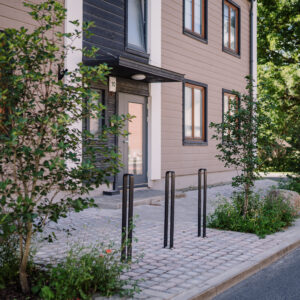
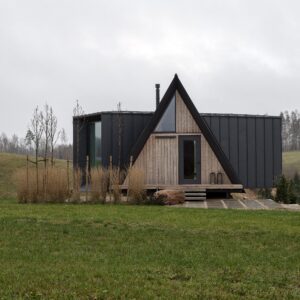
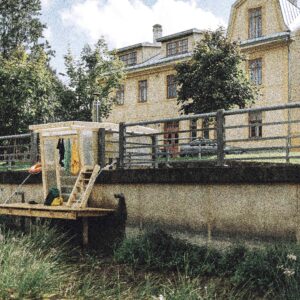
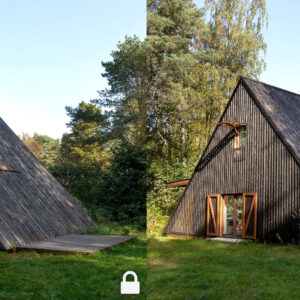
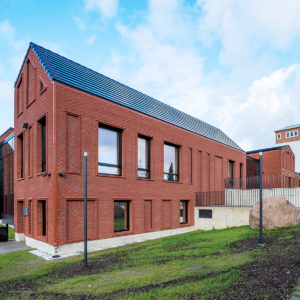
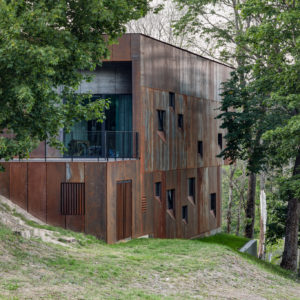
The residential building Award ELAMU went to The Private House at 11/1 Filosoofi Street in Tartu.
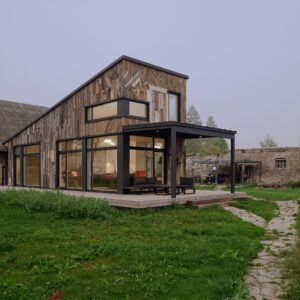
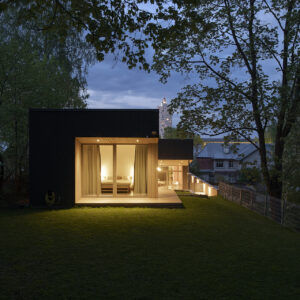
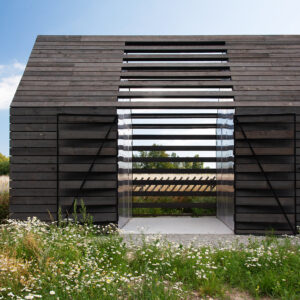
The house is in the courtyard of the former convent building of fraternity Lettonia in Tartu and is a conversion of a double garage built for forest industry vehicles in the 1960s. The garage walls were constructed up to four metres high to accommodate large forestry vehicles. When the garage was put up for sale, the architects recognised the value of its location, historic wall, and spatial geometry. A compact townhouse was designed within and above the old walls, providing sufficient space for a family of four. The location on the edge of the city centre, in a quiet green belt of courtyards allows residents to be well connected to both public functions and urban nature. The simplicity and spaciousness of the 80-square-metre house create a quality that can be appreciated in everyday life. The high-ceilinged living room, opening onto the private yard, offers qualities that additional floor area could not compensate for.
Architecture: Liis Uustal ja Egon Metusala (ABMA arhitektid)
Photos: Keidi Porval, Talis Taim
The Student Prize went to Marta Elisabeth Tikman, whose MA thesis “Evolved Vernacular: Applying Historic Strategies in Contemporary Architecture” takes as its starting point contemporary approaches to climate change that have reduced buildings to mere shells around technical systems. This, in turn, has led to a situation where various relevant aspects of the problem such as the impact of utility systems on the climate as well as overconsumption are overlooked. These modernist practices have pushed the topics of indoor climate to the engineer’s desk while the architect can only formalise the shape of the building. Architecture rooted in cultural heritage and evolved from it does not necessitate abandoning technology; instead, it calls for a new hierarchy that prioritizes passive techniques, restoring the architect’s historical role as creator of the indoor climate.
Photo: Martin Siplane
Four awards of the Estonian Association of Interior Architects:
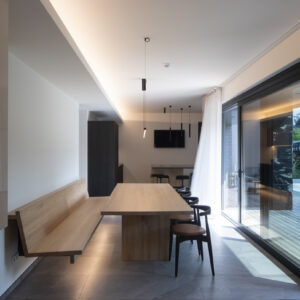
Interiors for a House in Nõmme
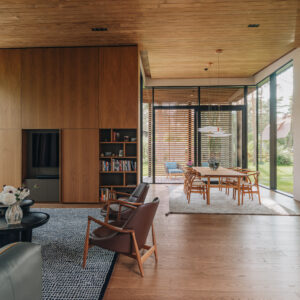
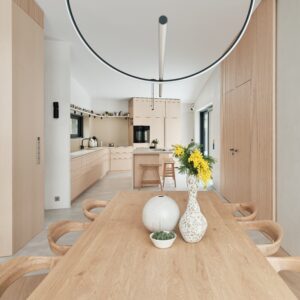
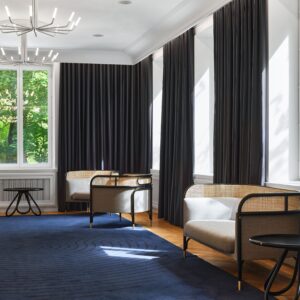
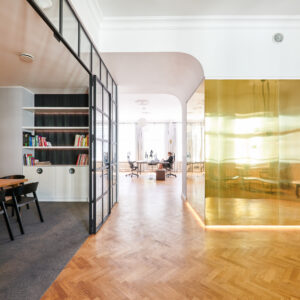
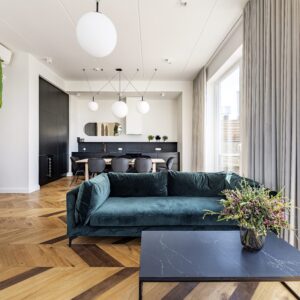
This house in Nõmme is tasteful and inward-looking; its architecture and interior make it an introvert in contrast to the noise of the city. The living areas are clustered around a central interior courtyard, offering an atmosphere almost akin to a cloister. The choices made on the interior are a homage to mid-20th century modernism, where the exterior area also enters the interior through the atrium. The central courtyard provides light and transparency but also serves as a practical outdoor area. In the selection of materials, the interior architecture has remained true to Nordic qualities: natural wood, discreet tonalities and tactile solutions. The interior weaves together Danish Golden Age furniture and contemporary solutions. This detached home is a good example of how the interior architect is above all in the role of understanding and listening to the customer. Close cooperation and ability to sense the inhabitants’ rhythms, needs and personality allows the creation of a home that is not just functional but resembles the homeowner.
Interior architecture: Lilian Esing, Kätlin Ölluk, Aet Kiivet (AERIS)
Photos: Tõnu Tunnel
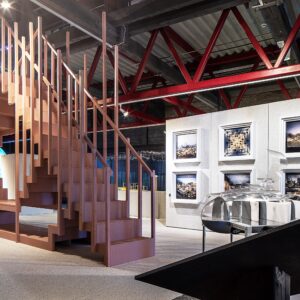
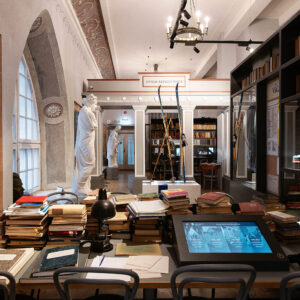
Design for the exhibition “Between Borders, Between Materials”
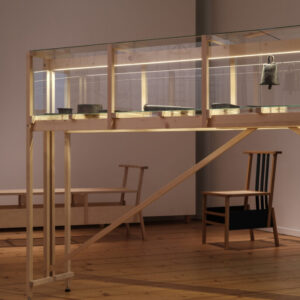
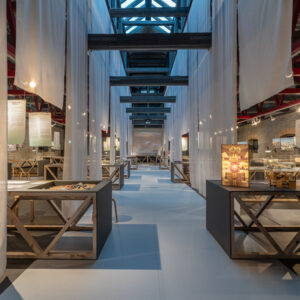
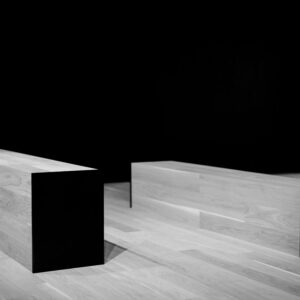
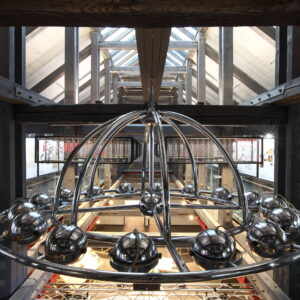
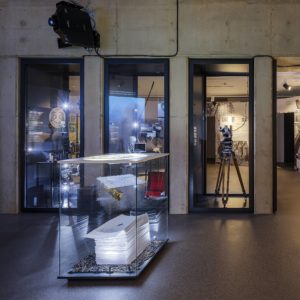
The Estonian Museum of Applied Art and Design’s summer exhibition in 2025 investigated the artist’s relationship to material in its broadest sense. The biggest challenge when it came to creating the design was to invent a unified system where each work was equally important for the exhibition whole and the works would support each other. The primary element of the exhibition was a black perforated metal mesh that created a clear reference system for the works, yet whose streamlined nature kept exhibitiongoers in motion. The works were installed on white plinths in different measurements, some of them covered with glass domes, and others left boldly out in the open, expressing trust in the museum visitor. Some works hung vertically in the museum space converted from a former barn, creating multiple levels for viewing. The centrepiece of the exhibition was a neon sign produced especially for the exhibition, reading “piirideta___ (borderless ___), and its delicate calligraphic style became the signature element of the exhibition.
Author: Hanna Karits
Photos: Tõnu Tunnel
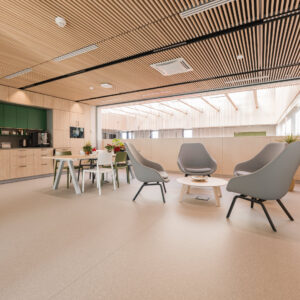
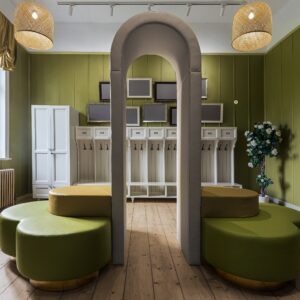
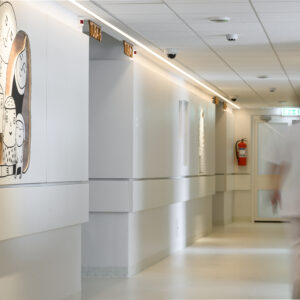
Tervikum is the first entirely new hospital building constructed in Estonia since the restoration of independence. The new healthcare building was planned holistically, with the boundary between architecture and interior design treated as both natural and intentional. The interior architects emphasized human-scale proportions and richly detailed public spaces, where plants, seating areas, and warm lighting take a central role. Colour schemes shift subtly between departments, inspired by natural tones. Wood is used throughout the interiors in varied applications and intensities, creating a unifying material language across the building. While Tervikum integrates diverse healthcare services and cross-disciplinary functions, its interiors remain coherently tied together. The new complex provides a functional, human-centered environment that challenges the stereotype of hospitals as sterile and bleak.
Interior architecture: Tarmo Piirmets (Pink)
Photos: Tõnu Tunnel
The Vello Asi Student Prize (bestowed jointly by the Estonian Association of Interior Architects and the Estonian Academy of Arts) went to Linda Zupping.
Malle Jürgenson, Head of the Department of Interior Architecture at the Estonian Academy of Arts and Visiting Professor, describes Linda as an active and independent creator whose activity reflects a questing and meaning-making spirit. Besides her teaching activity, Linda contributes to the organizational side of university life and creating a good educational environment, be it welcoming international students, supervising creative subjects and participating in other activities.
Photo: Albert Kerstna
Four awards of the Estonian Association of Landscape Architects:
The Award for Educational Landscape went to The Landscaping of Pelgulinn State Secondary School.
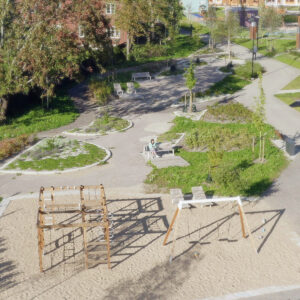
PERG is a school in a park, a park school, a nursery. The aim of the project was to retain the earlier greenery, increase biodiversity and add tall plants and trees. The outdoor greenery is structured by the regular network of Scots pines which is interrupted in places to accommodate the necessary functions and activities. The resulting clearings are illuminated and open to views. Elsewhere, the trunks of the pine trees leave enough space on the ground and over time the crowns will create a thick canopy above the courtyard. The valuable trees in the school yard were preserved as much as possible. The selection of plants was based on conditions suitable for meadowsweet, using species characteristic of wet meadow communities. Shrubs were planted to align views and separate spaces. It was also considered important that the plants produce edible fruit. In addition to plant beds, greenhouses provide students with opportunities to cultivate a variety of plants. The outdoor area encourages physical activity with swings, ball courts, fitness equipment, and running tracks. As a public space, the sports facilities are also accessible to local residents.
Landscape architecture: Mirko Traks, Juhan Teppart, Karin Bachmann (KINO maastikuarhitektid)
Photos: Juhan Teppart
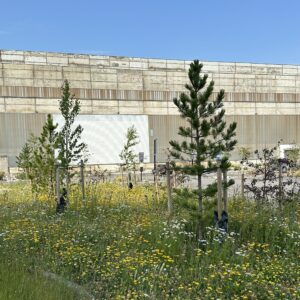
The Award for Temporary Space went to The Temporary Parking Lot at 12 Sepapaja Street in Ülemiste City.
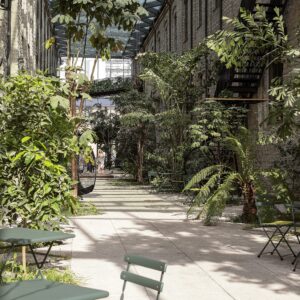
Ülemiste City is in constant development and the owners, thus, urgently needed to increase the parking area that could be gradually filled with buildings in the future. On the landscape architect’s initiative, the client’s desire to bring greenery to the parking lot turned into a temporary landscaping concept relying on non-standard seedlings from local nurseries left to grow on the fields. The idea was to give them a new lease of life so that after some years of maintenance and care, the strongest of them could be replanted in the new developments in Ülemiste City. In addition to trees, the greenery was complemented with taller plants (grasses and perennials) with also meadow grass seeds sown to get flowers to hover over the front of cars. The result was an unusually lush combination of plants in an otherwise monotonous parking lot.
Landscape architecture: Grete Veskiväli-Dubov and Merilin Sasilo (Punktiir)
Photos: Tuuli Pruuli
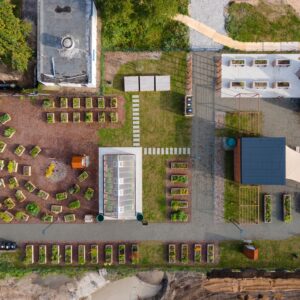
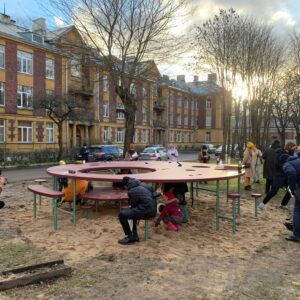
The Award for Co-created Space went to Pelgulinna Community Garden.
Pelgulinna community garden was one of those enjoyable projects where architects could work with a great and active client. Community is a priceless resource as it deals with all important tasks that the city might otherwise struggle with – it provides security in the area, regulates activities, ensures maintenance and management and creates an increasingly important aspect in the urban space, that is, inclusion. The main aim was to build a community garden that could be used by as many people as possible. For example, the covered area for public events has been used for meetings, performances and presentations, open-air cafés, birthdays, outdoor training and many other joint activities. Gardeners have installed hanging chairs on the pine tree as well as fences between the patches. It is gratifying to see the project area continue to grow on its own allowing people to enjoy outdoor living and ensure biodiversity.
Landscape architecture: Gianfranco Franchi, Chiara Tesi and Rea Sepping (F+A maastikuarhitektuur)
Photos: Martin Siplane, Martin Pennaste
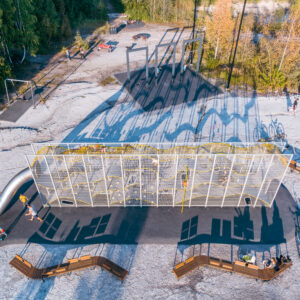
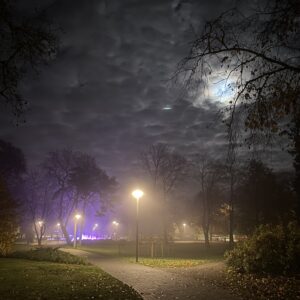
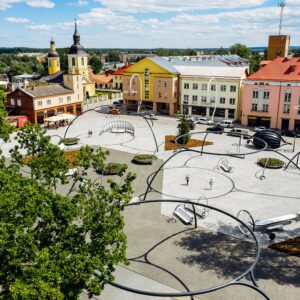
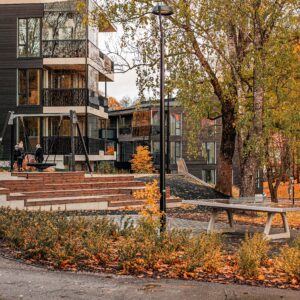
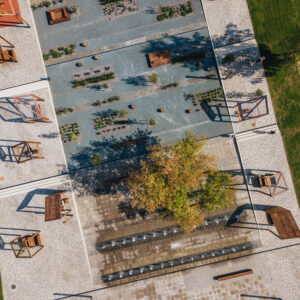
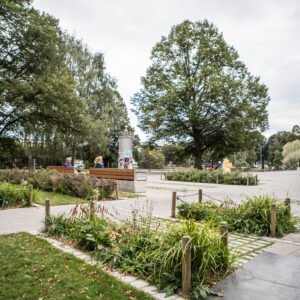
The Award for Public Space went to Krulli park.
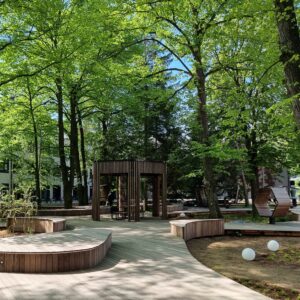
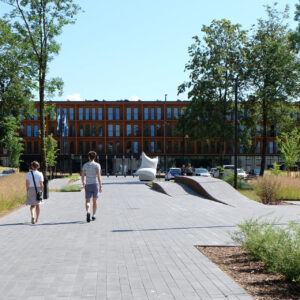
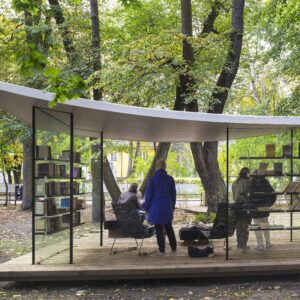
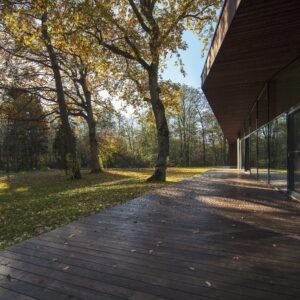
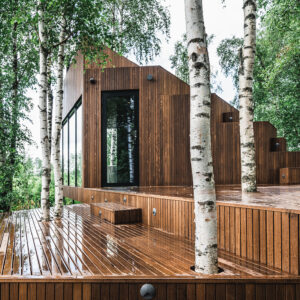
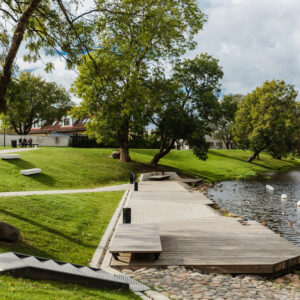
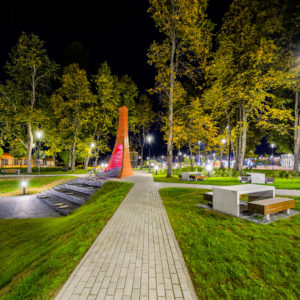
The greatest value of the site is the large trees. That is why the project tried to come up with a solution that would preserve the trees while creating a recreational area for the residents and employees. Landscape architects created the environment as natural as possible to make people feel as if on a hiking trail allowing them to recover from the stress of urban life. There is a timber platform raised above the ground with seating for various purposes (pavilions, swivel chairs, larger platforms etc.). This way, office workers can work outdoors either alone or in groups. The terrace area is accentuated by trees with the plants underneath reminiscent of Estonian forests. There are also shallow depressions for natural rainwater infiltration, creating even richer vegetation in the park forest area.
Landscape architecture: Mai Mirjam Kuuskme, Maret Abel, Khaled Abdelmonem Sayed Mohamed, Alvin Kanarbik, Toomas Põld (Loovmaastik)
Photos: Toomas Põld
MAJA Magazine Article Award
The Article Award of magazine MAJA went to Roland Reemaa for the article “Tidings from a Man-Made Plateau”, which was published in number 120 issue of the magazine (2-2025, “Concrete”).
Concrete is a material designed to last. Yet more than one cubic metre of it is produced each year for every person on the planet. Is all this material mass used wisely? And what happens to the part of it that is no longer needed for its original purpose? Although it is widely assumed that what has already been built is worthless, Roland Reemaa demonstrates that existing buildings can be viewed as material reserves – resources from which new structures for new contexts can be created. The article examines in greater detail two projects in Estonia and Denmark where old building skeletons have been transformed into new value. While in today’s world the realisation of such projects still requires the alignment of market forces, specialised design expertise and bureaucratic processes, there is hope that preserving and reusing what already exists will become standard practice, reducing the environmental impact associated with producing new materials and preventing humanity from being buried under concrete.
The audience’s favorite was revealed in three categories
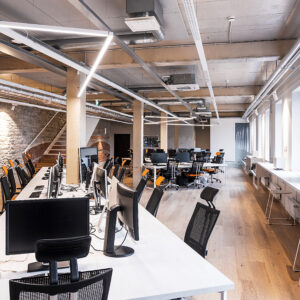
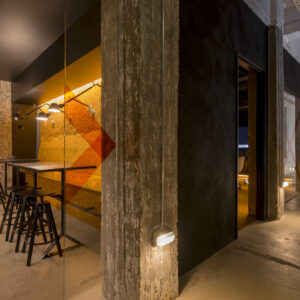
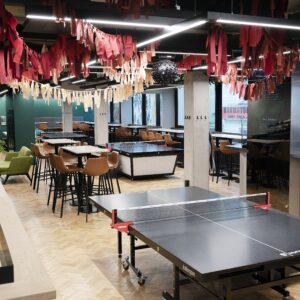
Interior architecture: Tallinn Office of Wise
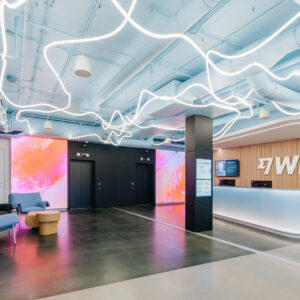
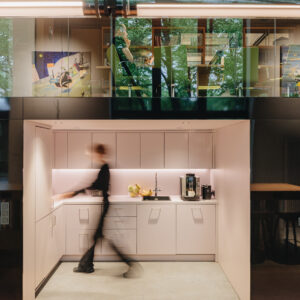
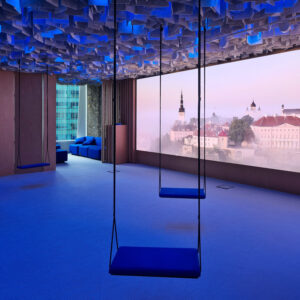
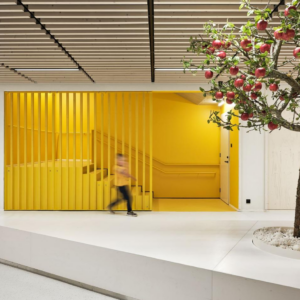
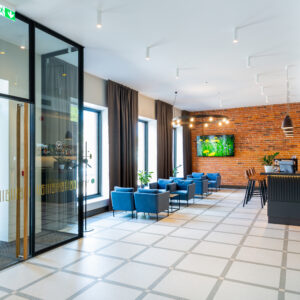
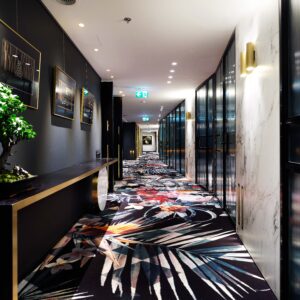
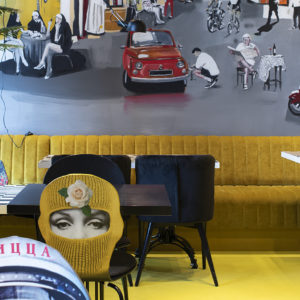
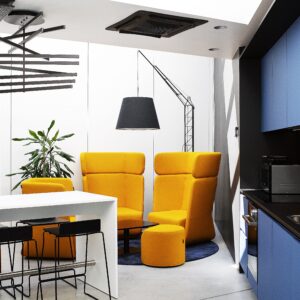
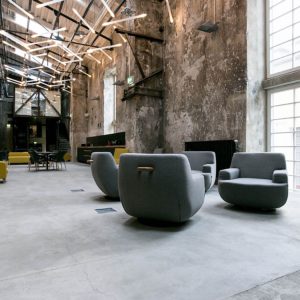
This year, Wise opened its largest offices, covering almost 20,000 m2, in the Krulli complex in Tallinn. Befitting an innovative and modern tech firm, the new offices are bright and dynamic. The room layout at Wise is exciting and sometimes surprising: there are ten kitchens, a karaoke bar, a band room and sauna complex. The floor plan derived from the historical building is supported by different colour spectrums, themes and main materials, which rotate by floor. The building also has a comprehensive system of signage to make it easier to navigate.
Interior architecture: Kariina Babic, Kersti Pilar, Kaur Käärma, Eeva Sova, Marii Leemet, Skaidrite Kits, Mirelle Tomson, Roosi Keva (LÄVI sisearhitektid)
Photos: Tõnu Tunnel
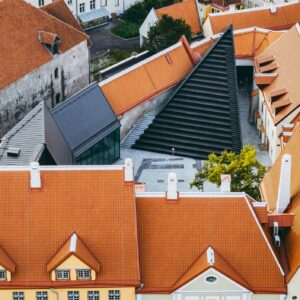
Architecture: Tallinn City Theatre
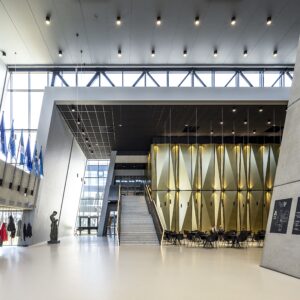
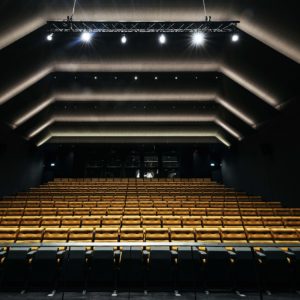
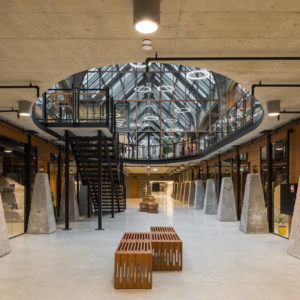
According to British architect and critic Sam Jacob, this is an exceptional project in which several historic buildings and spaces are interwoven with contemporary additions and subtractions to create a powerful new cultural complex. The project combines sensitivity with boldness. The challenge of creating new theatre halls under such constrained conditions has been met with unwavering confidence. The undertaking demonstrates how a restoration project in a historic setting of this kind can be grounded in both care and imagination, and how large-scale contemporary cultural buildings can be integrated with medieval proportions in a way that brings genuine social life into a historic quarter.
Architects: Ralf Lõoke, Maarja Kask, Märten Peterson, Andro Mänd (Salto architects)
Photos: Tõnu Tunnel, Kaupo Kalda, Andro Mänd
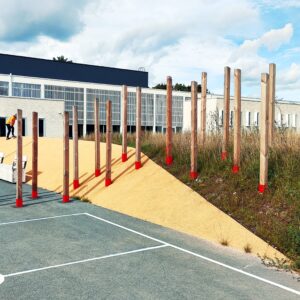
Landscape architecture: The Landscape Architecture of Rae State Secondary School and Tuule Sports Building
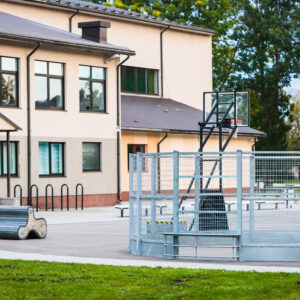
The starting point for the design was the need to prevent noise from the road. So, high walls were constructed along the road and raised landscape forms near the school with a bike station hidden inside. It was decided to place the parking area compactly in one place. This creates a spacious courtyard around the school, which encourages imagination and exercise and offers opportunities for outdoor learning. The large square in front of the house is for gatherings and other events, in warmer weather, students can also eat their lunch there. The outdoor gym is covered with a roof and partially enclosed by glass walls to protect it from wind and rain. Existing vegetation has been preserved as much as possible. There is a small grove near the burial mound while the area near the road and substation is covered with denser greenery. An arboretum is planned near the substation to enhance the natural feel. Several species suitable for birds and insects have been planted to increase biodiversity. Larger clearings are covered with meadow species. There are rain gardens around the building collecting water from the pavement and roofs. The plants are generally low maintenance and suit the conditions. It is thus a good place to introduce students to the local biodiversity and ecology.
Landscape architecture: Eleriin Tekko, Katri Soonberg, Elina Koel (KOKO arhitektid); the architectural structures and the site plan were developed in collaboration with architects Martin Tago, Lembit-Kaur Stöör, Raivo Kotov, Andrus Kõresaar, Merilin Jürimets, Xenia Sooniste (KOKO arhitektid)
Photos: Tõnu Tunnel
The publications “Estonian Architecture Awards 2025” and “Ruumipilt 2025” are available in bookstores.
The TV broadcast introducing this year’s winners and providing an overview of the best of Estonian architecture will premiere in September 2026.
The event was supported by: Bauroc, Floorin/Forbo, VELUX Eesti, Caparol, Hals Interiors, Jung, Lincona, Nudist Drinks and Liviko.
Main partners: Architecture Endowment of the Cultural Endowment of Estonia and publishing house Arhitektuurikirjastus.
The event was organized by the Estonian Association of Architects, the Estonian Association of Interior Architects and the Estonian Association of Landscape Architects. The joint annual ceremony was initiated in the year of 2015 to acknowledge the most outstanding achievements in contemporary Estonian architecture.
Visual identity: Unt / Tammik.


